The First Republics (1918-1920/21) in the South Caucasus: Brief Experiences of Statehood Published: 20 September 2021 The Heinrich Boell Foundation Tbilisi Office – South Caucasus region, together with Ilia State University and the Soviet Past Research Laboratory (SOVLAB), organizes the South Caucasus Regional Conference on Memory Politics to address the foundations and legacy of the first independent republics in the South Caucasus (SC).
European History Forum: 30 Years after 1989 Published: 3 July 2019 My research focused on the protest rallies that took place on April 9, 1989. Today in Georgia, on the 30th anniversary of the 9th of April, many associate this day with the restoration of Georgia’s independence. In fact, it is undeniable that the sequence of the events that transpired that day, coupled with all the other circumstances unfolding in 1989, created the preconditions for the restoration of Georgia’s independence. By Katie Sartania
8th European History Forum: 30 years after 1989: Freedom from What? Freedom to do What? Published: 4 July 2019 In 1989, a wave of revolutions swept the Eastern Bloc in Europe. The reform movement that ended communism in East Central Europe began in Poland. Solidarity, an anti-Communist trade union and social movement, had forced Poland’s Communist government to recognize it in the 1980s through a wave of strikes that gained international attention. By Eviya Hovhannisyan
Transformations of the Communist Party’s official newspaper “Soviet Armenia” in 1989 Published: 14 June 2019 This paper discusses the structural and ideological transformations of the Communist party’s official newspaper Soviet Armenia and follows a case-study approach based on the oral history interview. By Parandzem Paryan
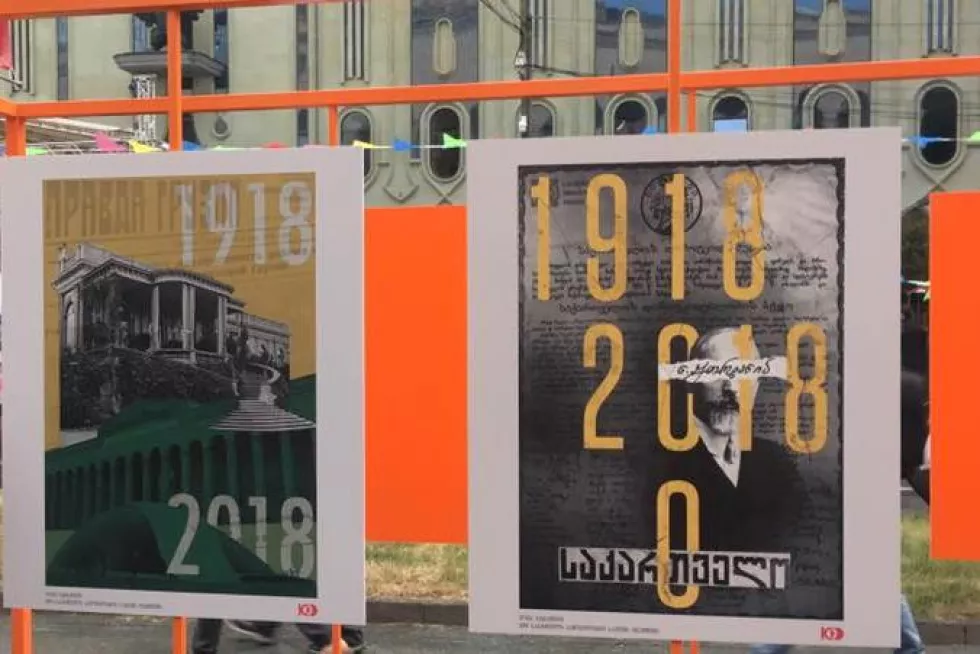
100 years after: the countries of the South Caucasus from the declaration of independence till 2018 Published: 28 May 2018 In order to commemorate 100 years anniversary since the declaration of independence of Armenia, Azerbaijan and Georgia, the Heinrich Boell Foundation presents analytical articles that on the one hand, reflect on the main foreign and internal priorities of the first republics and on the other hand, analyze what is the impact of the short-lived experiences of statehood on the democratic political culture of the South Caucasus.
Democratic Republic of Azerbaijan (1918-20): Origins, Milestones and Legacy Published: 28 May 2018 Undoubtedly the emergence of the Democratic Republic of Azerbaijan (ADR) was the by-product of a broad range of processes and dynamics in and around of the Caucasus, the developments in the Tsarist Russia as well as in the neighbouring countries of the Russian Caucasus, the Ottoman Empire and Persia. The elites of the ADR, both of Muslim and of non-Muslim faith were socialized in the late Romanov period. Azərbaycan dilində By Zaur Gasimov
The “Garbage Bin” Approach to History and its Discontents Published: 28 May 2018 For a people whose history covers a few millennia, the significance of the First Republic of Armenia far exceeds the number of years it lasted. Other than the Genocide that preceded it, I doubt that there is another period of two and one-half years that has received more attention by scholars, memoirists, and polemicists. հայերեն By Jirair Libaridian
From Revolutionary Struggle to Social Emancipation Published: 30 July 2017 On 5 March 1917, at 11 o’clock in the morning, many members of the Caucasian workers’ movement and thousands of ordinary citizens gathered in Nadzaladevi’s Theatre Square. The revolutionaries had assembled in order to receive the latest reports of the events then unfolding in St Petersburg. The people were interested in hearing whether the February Revolution had achieved its goal. By Levan Lortkipanidze
From International Revolution to a National State – The Case of Georgian Social Democracy (1917-1921) Published: 30 July 2017 In the twilight years of the 19th century, the Georgian people were faced with a number of challenges. Although the abolition of feudalism had liberated the peasantry, they had not been given land and their afflicted state remained the same. A number of freed peasants headed for the cities and filled the ranks of the proletariat, encountering “brute capitalism” in a place where basic labour rights were not regulated. By Beka Kobakhidze
Closing Round of the Series of Keep the History Workshops Published: 27 November 2014 Seven Months after the first meeting of 14 Georgian researchers within the workshop on oral history methodology the results of the project were presented at the Europe House in Tbilisi on November 11, 2014.