Zora Siebert Head of Programme - EU Democracy and Digital Policy, Heinrich-Böll-Stiftung European Union
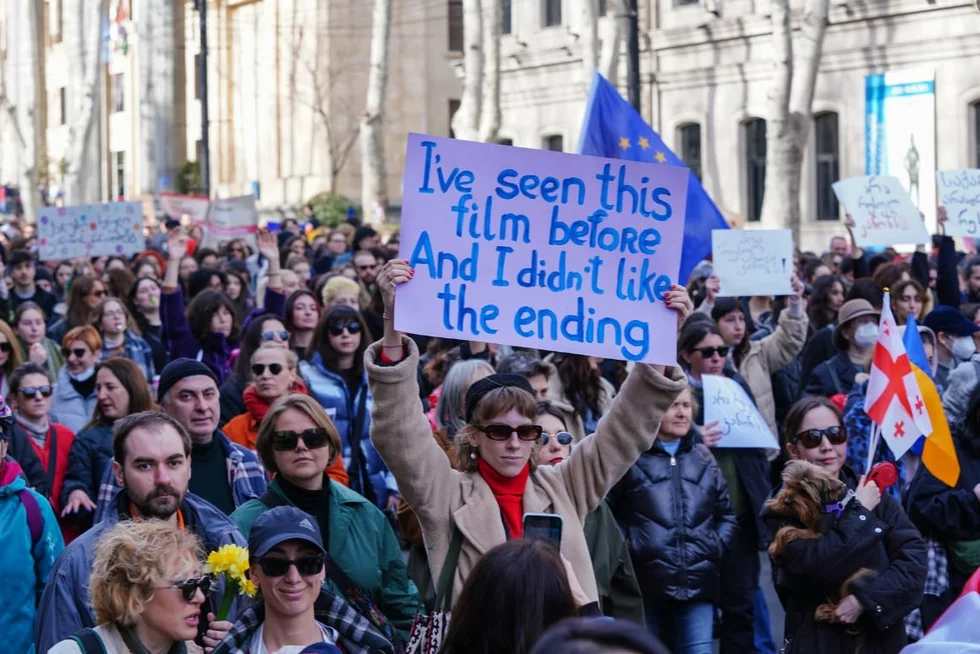
3 Questions on the situation in Georgia to Sonja Schiffers Just under six months ago, Georgia became a formal candidate for EU membership. The Law on Transparency of Foreign Influence, adopted in mid-May 2024, however, hinders Georgian accession to the EU and has drawn massive protests by Georgian society. Zora Siebert, Helena Borst, Dr. Sonja Schiffers
The Psychological Consequences of the Karabakh Wars in Azerbaijan: The Womanly Face of Trauma The psychological trauma inflicted on Azerbaijani society by the Karabakh conflict has not yet been processed; moreover, it has not been fully realized. The return of territories not only failed to heal these injuries but apparently sparked new fears in society. Nika Musavi
Психологические последствия карабахских войн для Азербайджана: женское лицо травмы Карабахский конфликт нанес азербайджанскому обществу психологические травмы, не только до сих пор не проработанные, но даже толком не осознанные. И даже с возвращением территорий, давшимся ценой новой войны, общество не только не излечилось, но, похоже, приобрело новую фобию. Nika Musavi
Statement about the Draft Law on "Transparency of Foreign Influence" Statement by the German Political Foundations about the Draft Law on "Transparency of Foreign Influence."
Women in Cyberspace: Analysing Vulnerabilities and Gaps (2023) The goal of the project is to provide first comprehensive research about the perspectives of Georgian women on cybersecurity, with a special emphasis on women’s challenges that would help policymakers and law enforcement agencies to incorporate gender-specific approaches in the policy making process.
From Raids to Wars: Queer Bodies for the Homeland, Azerbaijan While the impact of war and militarism is often studied in relation to women, this article looks at the relationship of toxic masculinity, militarism, homonationalism, and queerness in Azerbaijan in the context of the Second Nagorno-Karabakh War. Lili Nazarov
Psychosocial Rehabilitation of Karabakh Armenians: The Womanly Face of Trauma This article traces the history of psychosocial support in Nagorno-Karabakh throughout its existence against the backdrop of general skepticism among care recipients. The text is based on personal experience, observations and research. As a journalist, I have covered this topic on numerous occasions; all the stories in this article are collected through personal meetings and conversations. Alvard Grigoryan